Sarah's blog

  Subscribe to RSS feed

Sunday, May 20, 2012

When life throws you rotten eggs … make lemonade.

image

I shouldn’t be sitting here at my desk right now. I should be making sure my seat back is upright, my tray table is put away, and my bag is safely stowed under the seat in front of me – prior to taking off for London.  Seven precious days in my British pad, crowned by tomorrow night’s big birthday dinner for my twin boys, both amazingly and miraculously in the same country and city for 24 hours – and at the same time as me!

This is the very minute I should be taking off, but I’m not, even though I was at the airport, as commanded by United, at 7am this morning. The flight has been delayed by 9 hours - till tonight - which means I had to come home again and prepare for an overnight flight instead, meaning I’ll arrive frazzled and jetlagged tomorrow morning. When flights cost this much and time is so short, the stakes are very high and delay is hard to tolerate.

But this isn’t the only setback of the week. Last Saturday I sat down at my desk, having resigned myself to working most of that gorgeously sunny weekend. I opened my laptop, booted her up and distracted myself while she ran through her ‘updates’. But then, in a heartstopping moment, the screen went black. All the programmes had gone, nothing would open – it was a major and terminal crash, taking with it not only years of photo images, but also the mosaic of my BEA schedule. (Don’t worry – the Greenhouse functions on a remote server, so I knew that was all safe, even though I couldn’t access anything.) The timing couldn’t have been worse: preparing to go to London, followed by the Expo, followed by the SCBWI New Jersey conference – a packed and intricate few weeks, every event requiring copious preparation.

Head in hands, I tried not to hyperventilate, scream or cry.
image

Back up on a borrowed laptop, the week continued to throw further challenges – notably, various bits of bad news that I had to relay to clients. How to frame things to be fair and honest; what words to use; how to empathize yet protect oneself from the negative effects of over-emotional engagement (not helpful or professional for the client or me); where to find the line between loyalty/belief in one’s client and their work, and accurately reflecting the demands of the market?

A talk I’m preparing for the NJ conference in June on ‘Contracts and Negotiations’ has made me think about the agent/client relationship. In many ways it is like a marriage, and the agency/author contract (in the case of Greenhouse, a paper agreement 1.5 pages long) is a bit like the wedding band – the outward symbol (and statement) of our mutual commitment. We are bound together in sickness and in health – through good news and through bad – unless/ until one of us decides the relationship has irretrievably broken down or we are no longer going anywhere mutually beneficial. Then divorce is an option, even if painful for both sides.

I’ve been very lucky as an agent, and I’ve had more than my fair share of good news to impart. And oh, how I love imparting it! Who wouldn’t enjoy telling people that their publication dream has been realized, that their life is about to change, that their hard work has paid off in ways that can be quite spectacular. It’s a dream job, right? (People are always telling me that.)

image

But in any marriage there are setbacks and rocky bits along the way. Times of compromise and adjustment; times of darkness and confusion; times when you don’t feel listened to or truly understood. In fact, you don’t even have to be married to know that; life chucks it all at you. The frustration of delayed flights, missed connections, crashed computers, fractured ankles (one of my sons, right now), jobs you didn’t get. And even worse – illness, loss, the whole beastly litany.

You have to be strong, and flexible, and determined, and resilient, to make things work as a human being. When you get knocked down, you have to clamber back up. If one avenue seems blocked, try another. Is the door shut and bolted? So go round the back and see if you can climb in the window.  Or maybe there’s another house that’s more accessible.

My husband (and my French teacher, bless her heart) will tell you that I’m the world’s most impatient person. I want success and I want it NOW. I want to be the best, and I can’t stand being thwarted. I’ve gone back to studying French, so I work at it like a maniac – but why can’t I speak like a native NOW?  For me, the words ‘delayed gratification’ are alien life forms and my relationship with them is uneasy.

image

And yet, I’m getting there, because I see time and again the fruits of taking small, careful, considered steps in the right direction. It’s why we work so hard on debut manuscripts - to give the author the best opportunity to achieve their dream. It’s why we really try to be honest about what we think will work and what won’t (so we don’t waste everyone’s time and give false hopes).

I’ve known agents who so hate imparting bad news that they just don’t return phone calls; they disengage. It’s like the boyfriend or girlfriend who doesn’t return messages, hoping their partner will get so frustrated that they’ll initiate the break-up for them.  To me, that is really, really cowardly, and it’s the ultimate disrespect to clients.

My sons have become much wiser than me as they’ve got older (now in their 20s), and I regularly ask their advice on just about everything. A while ago, one of them said to me: ‘Mom, I feel I can deal with anything as long as I’ve done my best, and done what I really believe is right.’

He is right on the button. As an agent, my most important quality must be integrity. Anyone can convey fabulous, happy news. Anyone can do what’s easy. But the chips are down for us as human beings when we have to deal with, come back from, or simply communicate, news that is really difficult.

So here I sit, writing a blog post on my brand-new laptop (hey, it’s WAY better than the old rig and my IT guru says it’s the fastest machine yet invented. AND he recaptured all my images and schedule. Wow, am I glad we had that crash!).

I should be on a plane, and it is confusing and weird that I’m not. But – I had been wanting to write a post for a while and couldn’t quite find my subject. Driving back from the airport this morning, I suddenly found it. And I guess I’m trying for a more sophisticated way of saying, ‘When life gives you lemons, make lemonade.’

image

Here’s some news: we’re all human beings. That means we’re all going to have rotten eggs and squashed tomatoes chucked at us at intervals. (Sometimes it’ll even be me doing the chucking; rest assured I’m being chucked at too.) But the million-dollar question is this:

WHAT ARE WE GOING TO DO ABOUT IT?

Posted by greenhouse
(3) Comments | Permalink

Thursday, May 03, 2012

ANNOUNCING THE GREENHOUSE FUNNY PRIZE - OPEN TO UK/IRISH WRITERS

image

Julia here, and I’m excited about something. The UK side of the Greenhouse is running a prize in conjunction with this year’s Writer’s Workshop Festival of Writing. It will be called the Greenhouse Funny Prize.

At Greenhouse we love all sorts of writing for children. We love edgy, wincingly close-to-the-bone YA fiction, we love thrilling, commercial concepts with big surprises, and beautiful and heartfelt younger stories. I could keep going, but in short, we love quality. And there’s something that Sarah and I agree that we don’t see enough of: Funny.

I had the idea for a prize because every time I sit down with an editor and ask what they’re looking for, they generally say, ‘Funny. We need humour’. When I was little, half of my reading was humour – Dahl, the Ahlbergs, JUST WILLIAM, MR MAJEIKA, WHAT-A-MESS, FUDGE, ASTERIX. And there is loads of great humour on the market today - WIMPY KID, Andy Stanton, Lauren Child, Dave Pilkey, David Walliams. Funny is selling in the shops, publishers are wide open to it, and yet we don’t see that represented in our submissions inbox. We want more laughs.

The Greenhouse Funny prize is open to un-agented writers who are currently resident in the UK and Ireland. Entries will be judged by me and guest judge Leah Thaxton, Publishing Director of Egmont Children’s Books (and discoverer of Andy Stanton).

The winner will get an offer of representation from the Greenhouse and a full weekend ticket to the wonderful Festival of Writing that runs 7-9 September ’12 (worth £525). The winner will also be presented with a bottle of champagne at the Festival’s gala dinner on the Saturday night. The runners up will each get five of my favourite funny books, and maybe even a comedy mug.

Our judging criteria is very simple. Funny, and we are wide open to all ages. The winner may be a picture book like OLIVIA or DON’T LET THE PIGEON DRIVE THE BUS, or a young series à la HORRID HENRY, FLAT STANLEY, THE GREAT HAMSTER MASSACRE or UNDEAD PETS, or for 8-12 year olds like Lemony Snicket or RAMONA. It could even be for teen readers, like Louise Rennison, DOES MY HEAD LOOK BIG IN THIS? or THE PRINCESS DIARIES. It’s going to be the person with funny in their DNA.

Funny is subjective, of course. Perhaps the winner will have a slow-burning, gentle wit. Perhaps a Python-esque sense of the absurd. Or maybe the concept, and the freshness and immediacy of it, will do much of the heavy lifting.

Entry guidelines:

1) To get a good sense of the voice and where the character is headed, we’d like to see the first 5,000 words PLUS a short description (a few lines) of the book AND a one page outline that shows the spine of the plot. The book does not need to be completed at the time of entry.

2) Please attach the 5,000 words to a word document and send your entries to If you are submitting a picture book (or shorter fiction that comes in under 5,000 words), then send the complete text in a word document. The short description of the book and outline should be in the body of the email. PLEASE NOTE: This is different to our general Greenhouse submissions policy. If submitting work to the Greenhouse in the future (outside of the Greenhouse Prize), visit the How to Submit section of the website to find our submission guidelines.

3) You must be resident in the UK or Ireland.

4) The deadline for submissions is Monday 30 July.

The shortlist will be announced Monday 6 August. We anticipate that 6 writers will be shortlisted.

The winner will be announced Monday 13 August. If we get two or more outstanding entries, we may offer representation to more than one writer.

Entrants will not be acknowledged on receipt, but all entrants will be emailed when the shortlist is announced.

I’ll confess it feels a bit disingenuous to offer representation as a prize, because when those great books come along, I’d offer to represent anyway. It also feels a bit reckless. What happens if it’s all unfunny?! But I’m confident that at least one brilliant new voice will come to me if I open my arms and say out loud, ‘Show me the funny’. I’m happy to be transparent and say this is a totally self-serving competition. We just want to wave the flag to all those new writers tapping away in their sheds and spare rooms, and say, ‘Hey! If it’s funny, send to us! That’s what we’re looking for.’

image

I’ll post any updates here, so save this page in your ‘favourites’ if you’re thinking of entering. And if you could tweet/share/talk about it, we’d be ever so grateful.

Any last advice? Write for yourself, for the child in you. Write what makes you laugh. 

We’ll be looking at voice, character and concept. In a nutshell, we’re looking for originality and a writer who trusts their reader’s intelligence, whatever age they are. Really funny doesn’t feel like it’s busting a gut to be so – it’s effortless. We’re looking for someone who makes it look easy.

The little girl in the photos is my niece and she’s reading her favourite funny book. I can’t tell you how sweet it is to sit with her when she’s reading her best funny writers. She actually chuckles. I had forgotten all about chuckling. 

Posted by greenhouse
(3) Comments | Permalink

Monday, April 09, 2012

You mean I’ve got to write ANOTHER one?

image

[Please note: since chocolate is a well-known healer of woes in the writing community, this post is entirely illustrated with images of chocolate products. It should help.]

For most of us the problems of writing just one book can seem insuperable. First, there’s the basic idea that’s got to be knockout. Then there’s all that plotting, structure, subplots, a brilliant climax, amazing characters, voice, blah blah blah.  Oh, and then there’s the actual writing. And revising. (Rinse, repeat. Endlessly.)

Wow, you think – all I want to do is write ONE book, get a deal, and see it published! Then I’ll have absorbed all the wisdom of the publishing universe and be a success. In short, I will have Cracked It. Ie, Cracked the whole business of writing great books. Nothing will ever be as hard again, right?

Can you hear my evil chuckle?

You see, it can be every bit as hard STAYING published as it was to get published in the first place, and unless you want to be a one-book wonder you are going to have to contemplate a larger creative horizon than just that one book.  You may have put months if not years into that first book; if you write another you could be on a much tighter deadline and under contract. All of which means the stakes can suddenly feel a whole lot higher.

What do golfers feel when they’re contemplating that vital putt? Or tennis players when their opponent has three match points? We’ve all experienced it – the syndrome I’ll call The Massive Clutch-Up.

I am well acquainted with the Clutch-Up Syndrome and its effects on writers and, while no one can fully go there for you in your writing, I have a few bits of simple advice to share.

The first thing you need to know is that you’re not alone – all writers have stared in fear at the rockface known as Book 2. Self-analysis, self-doubt, anxiety, are all to be expected in the writing life. Don’t berate yourself for feeling them – embrace it and say, ‘Yeah, whatever. Get off my shoulder, you demon of self-doubt and self-denigration. I know you exist but you have nothing worthwhile to offer me.’ Then, just get on with it. It really is true that you can feel the fear but do it anyway (I know because I live that reality daily) and what do you have to lose? Over-thinking can lead to paralysis; to some extent you must just throw yourself in.

The second thing you need to know is that you are NOT an expert after writing one book. You thought you were? Sadly you were wrong. You are one tiny notch further along than you were before. You have a few more craft weapons in your armoury, but they’re still not very pointy-sharp. At least this time (especially if you went through revisions on Book 1 with an editor) you probably have more idea of what the target looks like, where it might be, even if you still don’t hit it half the time. So, try to be accepting of yourself and where you are. Yelling, ‘But you’re supposed to be able to DO this now, dummy!’ at yourself just won’t help; patient, careful work – again – is the best way.
image

Thirdly, as you start to get your ducks in a row for submission of your FIRST book (and especially if your agent is getting some interest on that book), it’s a good idea to be thinking more widely about what you could write next. When I submit I want to give editors the widest-possible range of options, so I tend to say, ‘This works well as a standalone, but equally there could be a sequel(s) – and the author has a half-page outline for what that sequel could be. Alternatively, the author has other standalone ideas too.’ You don’t need to have written any of these manuscripts at this stage -and actually, having a pile of completed sequels can make things really complicated because your first book will probably undergo a lot of revision that could radically alter how any sequels would be structured.  However, having a small number (ie, 2 or 3 – not 30) of good ideas in your back pocket can be a great help – then you have something strong to fall back on when an editor says, ‘So what is she/he writing next?’ When you’re under a deadline, building on a great new outline can be a lot easier than casting about from scratch, trying to find your basic good idea.

Fourthly, as you look at your Book 2 challenge, try to find strong support from other writers in the same boat. Like I said, you are not alone. Everyone you know who is published successfully faces these same challenges, and many – even if they hide it well – will suffer from some level of anxiety about ‘what comes next’ and their capability of writing it well. Share your feelings with a small number of trusted authors who can give you the advice and gentle support you need. I’m not talking about blasting your fears all over social media; rather, drawing around you a close-knit group of fellow-feelers who have walked the same path.
image

Fifthly, remember that you are out to become a writer of longevity. That means gradually learning more and more about how to shape, structure and craft a story. That learning is going to be really hard work and every time you start a new book it begins anew, with slightly different challenges. It is the same with any skill. I have learned musical instruments. I’ve started running. And now I’ve gone back to taking French lessons after many years. All these are really supersonically hard to do well. Writing is no different. You slog along, learning a bit each time, yet always despairing you will reach the level you want. Most great writers don’t think they are great – there are always new places to reach, new depths to be found, better ways of doing things. That is life, that is writing – and not even the best college course is going to give you a wholly easy road. But – when you look back you will realize that YES, you really have progressed!

Facing the Everest of Book 2? This challenge will partly be met by careful preparation – acquiring a small number of good new ideas and preparing pitches/short outlines well in advance so you have something strong on which to build when under pressure.

But the greater battle may well be fought in your own mind – the mental game of facing , standing up to and defeating your fears.  No, there isn’t something ‘silly/weak/embarrassing’ about having those fears – they are only human. Share them with your agent, build your relationships with sympathetic author buddies in a discreet environment. 

Having done that, put on your boots, string your bow and sharpen your spear. It’s time to stride out into your personal writing arena – where, gradually, you will find not only your story, but also your true self.

See you at your Book 2 launch party.  I’m bringing the champagne.

*******

Pix: All taken in Paris where they really do know what to do with chocolate.  1) Yes, this golf bag and ball really are entirely made from the sweet stuff.  2) Hot choc (3 different ways) on Ile St Louis. It is so sublime further description is impossible.  3) Tortoise - almost too cute to eat. Almost.

Posted by greenhouse
(7) Comments | Permalink

Friday, March 16, 2012

Julia’s Guest Post

image

Right now Sarah is sitting on her suitcase bursting with ARC’s, covers and finished copies, and I am standing amidst hundreds of lists and schedules. It is Bologna! Our annual rights fair is about to kick off. What does this mean???!

It means I’m prone to excitable punctuation, and that I have a hair trigger (probably don’t jump out at me wearing a Scream mask).  Everyone in children’s publishing has an elevated level of cortizol at this time of year and we will medicate with tortellini in brodo and the odd glass of prosecco.

For the past 45 years, Bologna has been the number one event in the children’s book business. The fair ground is a marketplace. We are all there to buy, sell and haggle. What’s fresh, what’s gone soft, how much???

This is our beloved industry, and it’s a changing industry. We will be meeting Amazon as publishers, we will be talking to app developers and people in the gaming industry. The world is a big place, and walking around the giant halls, we will see the book business of almost every country connecting, making money, expressing themselves.

Over these four days we will hear a hundred perspectives on the state of the market (what is selling, what isn’t; how retailers are reacting and operating). We listen out for ‘canaries’ – every fair gives an idea of what will be hard to sell, and what might be nearing its saturation point.

Our five-strong rights team will be downstairs in the giant halls, pitching to international publishers in a four-day blitz of back-to-back half-hour appointments. We are upstairs in the agents centre selling like mad to UK and US publishers, as well as film and TV people.

imageI love the Agents’ Centre. It’s got the intensity of a stock exchange, except you know everyone and many of them are friends. Imagine hundreds of tables, most of the agents in the business, and all the publishers, everyone talking books and deals, setting up what the industry will look like in two or three years. Amazing, right?

Bologna starts before Christmas. At some point in December someone in the office will stick their hand up and shout ‘FIRST’. They’ve just had an email requesting a spot in the diary. Over the next few months the schedule fills up. Ours is now locked down from 9-5.30 every day, but we have given ourselves a time-out for gelato on the Wednesday. 

There is a tonne of planning – flights, hotels, passes, schedules. And in the weeks before, Sarah and I start to focus on our ‘hotlist’. These are our brand new babies – debuts that we will send out in the months after Bologna.  We will be pitching them to editors, gauging interest, and also checking that the pitch is on point and we’re getting a good reaction. Every book needs to sound exciting, and if we’re not getting that vibe from the face and body language of the editor, we’ll know the pitch isn’t up to scratch. A good pitch needs to give the listener something to enter into – a kind of architecture, but not bunged up with too much detail. Editors will be on the receiving end of a hundred pitches a day, so ours need to stand out. We want them to hassle us for this manuscript as soon as they get home. That gives a great book the best possible start.

imageSo the fair is about new business. But it’s also about existing business. Sarah and I sit down with our editor partners and discuss issues around our books and authors – new deals, why a particular cover didn’t work, what the author should work on next, what disappointed us, what impressed us… Lots of topics, all essentially boiling down to the same question: what can we do to make this work?

Occasionally, an unpublished author will look to pitch their book. This is the one time of the year that we aren’t open to such an approach. Those precious hours and minutes need to be devoted to those authors we already represent – the time is guarded ferociously. So if you’re thinking of pitching your book to agents at a book fair, don’t. You will get the wrong impression of our industry, and the people in it. Bologna for us is about giving 100% commitment to our authors, not sourcing new talent. In fact I probably won’t be able to check my submissions while I’m out there. Well, maybe I’ll sneak a peek. A couple of years ago I took home the DARK INSIDE manuscript the evening before the fair, called Jeyn Roberts at 4.30 in the morning to sign her up minutes before my cab arrived, and was pitching her at Bologna five hours later. And that became our ‘book of the fair’.

After the last meeting of the day, it’s time to head out for the parties. And after the parties come the taxis to restaurants. On Tuesday night Greenhouse are hosting a dinner. A mix of publishers, scouts, journalists, film people and very good food. It’s become something of a tradition, starting out with a few well-chosen friends in 2009, and growing year on year.

Bologna is expensive. It costs a fortune to get us there, what with the costs of flights, rooms, tables and taxis.

imageBologna is ‘the red one’. It’s a beautiful, ancient city that I visit every year, and that I’ve never really seen.

Bologna is the most tired I will get all year. A groundhog of pitching every half hour, drinks and parties and dinners well into the night.

Bologna is beloved. Everyone comes back cross-eyed, shattered and a bit fatter. But also invigorated, inspired and with a refreshed view of the industry landscape.

If you want to post your questions about Bologna in the comments section, we’ll answer them when we’re back. I must run. Too many things to do…

Posted by greenhouse
(7) Comments | Permalink

Tuesday, February 14, 2012

The things I love about Adele

image

There are a few ways in which the singer Adele and I are similar.

We both come from the London area.
We both like to sing.
We are both female.

There are more ways in which we are not similar.

She won 6 Grammys the other night.
She is currently one of the most feted singers in the world.
She has big hair.
And she is 23.

Enough said.

There are many things I admire about Adele.

Her voice is a powerhouse.
She refuses to work with people who tell her she should look different to how she does.
She’s come back from throat surgery.

But the thing I like most about her is that she just sings. She gets up (or sits down), she wears a simple dress, she looks gorgeous, and . . . . . she just belts it out.  No revealing clothes, no pyrotechnics, no dancing, no weird stuff.

She just sings. Better than almost anyone you can think of.

It’s all about her voice. Her great lyrics. Her emotion.  That golden instrument.
image

Which made me think . . .

I love writing like that.  Spare, spotlit, devastating.
A powerful song sung on an empty stage so that the reader almost holds their breath.

I’m not saying it’s easy, forming any work of art like that.  But that sense of stillness, of control, are surely something for which to aim amid the multitudes of distractions. Finding one’s own voice, learning how to use it, letting the language speak powerfully and authentically and simply into the silence.

Want to know what I mean? Here is Adele, singing SOMEONE LIKE YOU. http://www.youtube.com/watch?v=qemWRToNYJY

Thank you, Adele, for being someone like us, and for doing it so incredibly well. 

Posted by greenhouse
(7) Comments | Permalink

Monday, February 06, 2012

The things I see (and don’t see)

image

Dead silence on Sarah’s blog for far too long. Why? 1) Having been quite ill over Christmas, I then got ill again in January and it went on for most of the month, making everything a struggle. 2) Been working like a dog. 3) Julia and I have been preparing for the Bologna Book Fair in March and 4) Spent 5 days in New York – firstly at the SCBWI National Conference (where I spoke three times on ‘how to write a great thriller’), and then around town seeing editors with clients Caroline Carlson, Donna Cooner, and Ashley Elston. And don’t you love the newly released jacket image here for Donna’s debut novel SKINNY, which publishes this Fall with Scholastic?

Now it’s all go as I prepare for the SCBWI regional conference in Austin, Texas in two weeks’ time. But first, I want to share some thoughts about my submissions inbox and the North American marketplace. Perhaps that will be useful as you decide where to invest your writing energies, especially if you are choosing between different ideas and projects to take forward.

Basically, I feel like I see rather too much of some kinds of stories and not nearly enough of others.  And I never, ever see some things that I would LOVE to see! So here goes . . .

What I see a LOT of:

Paranormal romance – especially demons (ie, hot demon boys) and angels (ie, hot angel boys), though vampires (ie, hot vampire boys) still appear very regularly. I also see a lot of ‘portals between the living and the dead’ and characters who are dead but interact with the living.

Girls ‘with powers’ – often they see visions, have significant dreams, predict death, have strange connections with others when they touch them. Sometimes they are deities and have to come to terms with that. In middle grade, I see girls who haven’t yet ‘come into their powers’ but surely will (which reminds me a lot of Ingrid Law’s SAVVY).

Car crashes in a prologue – often an entire family is wiped out, excluding the protagonist, who for some reason survives (often because she has powers).

Dystopia – stories set in a future world, often after a virus has swept the land, leaving humanity divided into tribes (these tend to be roughly divided into ‘haves’ and ‘have nots’). Sometimes some characters will have to fight each other in mortal combat, in a slightly HUNGER GAMES-ian kind of way.
image

Bullying and mean girls – this is a very big MG theme, but I see lots of groups of mean/vacuous/bitchy girls in YA.

Talking animals – especially cats, dogs and squirrels. These will usually have a mission. Often these stories are very young, but sometimes they are more sophisticated – along the lines of the WARRIORS series by Erin Hunter.

Fairies – in MG these are usually cute or anti-cute (ie, naughty fairies); in YA they will be dark, dangerous and often called ‘fae’.

What I don’t see enough (or any) of:

Adventurous middle grade – I do see a lot of younger MG, usually softer chapter-book-type stories (see above re bullying/mean girls), but not nearly enough adventure, with excitingly big themes and great action. Think Percy Jackson, Artemis Fowl. Ideally characters of 12/13, and ideally with a strong boy AND girl character. Think – MG thriller!

Really fun, original MG concepts - that combine rip-roaring story with a super-strong UNIQUE concept. My client Caroline Carlson did this brilliantly with her MAGIC MARKS THE SPOT (HarperCollins 2013) about a feisty girl who longs to be a pirate, only to discover that the pirate treasure/currency is in fact magic! A great new twist on an old idea, mixed with characters that really pop. Tons of fun!

What I call ‘sexy historical YA’ – like THE LUXE or A GREAT AND TERRIBLE BEAUTY.  A girl who thinks in an identifiably contemporary way, has a voice that can speak to today’s YA readers, yet lives out her story against a historical backdrop. I’d love to find a novel set in the French Revolution, Victorian times, or World War I. Big themes, candlelight, crinkling silk, corsets, characters behaving rather badly and under huge social pressures where feelings have to be suppressed (or face the penalties).

Contemporary YA with great romance and charm – this needs to be underpinned by a strong concept and standout voice. Donna Cooner’s SKINNY is a fab example – the story of a girl who embarks on gastric-bypass surgery, but finds it’s easier to change her body than to silence the voice of ‘skinny’ in her head. Donna somehow makes the reader smile AND shed a tear, which is quite an accomplishment.

image

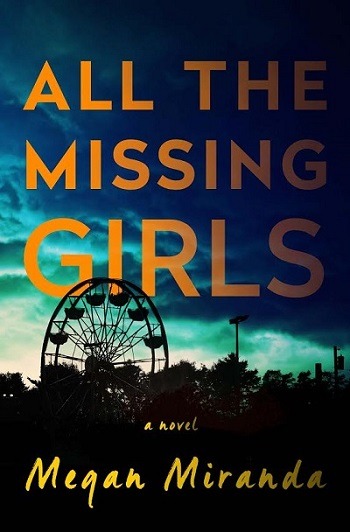
Intense, exciting YA – I never get tired of clever, tense, zigzaggy thriller-type plotting. A conundrum that doesn’t seem possible until the protagonist solves the mystery. Megan Miranda did this brilliantly in FRACTURE (Walker, just published) when Delaney Maxwell falls through the ice of a frozen lake and inexplicably survives, pulled out unharmed 11 minutes later. How? Why? This kind of story can be applied to almost any genre, against any kind of backdrop.

Foreign settings – I’d especially love to find a dark, bleak, noir-ish YA Scandinavian thriller in the style/tradition (landscape etc) of Henning Mankell, Tami Hoeg or Stieg Larsson.  Spare, scary and a bit mesmerizing.  I’m also interested in the Middle East and Africa.  NB: With this kind of story you need terrific authenticity, and I’m NOT seeking stories that attempt to ‘educate’ the reader about a particular part of the world. I’m just looking for a cracking good story that nonetheless contains emotional truth.

Ghosts – While most forms of paranormal have been somewhat ‘done to death’ (hah, sorry!), I think there’s still space for a brilliantly conceived ghost story. For some reason there seem to be far fewer ghosts around than other paranormal entities (see above re hot-boy demons etc). This doesn’t need to take the form of a ‘paranormal romance’.  Perhaps the ghostly character is a sister or friend who returns to play some vital part in the protagonist’s life?

Space – while dystopia is running out of steam, there’s still some potential in outer space. The trick here is to use that backdrop simply as a frame for a great human story, either MG or YA. If you go too sci-fi you lose readers who aren’t die-hard fans of the genre.

So, in conclusion: While I’d never say I’m uninterested in any paranormal romances, stories about ‘girls with powers’, or dystopia, you just need to be aware that there are a lot of them around, which means yours really has to sing. It needs to do something different and fresh with the genre. One of the keys to this is VOICE. Any story can feel fresh and vibrant if it has a unique voice and a different spin.

However, do consider writing in one of those areas I mention as being very underserved right now. Generally, I feel we don’t see enough strong and unique concepts, so trying pushing yourself that extra mile to come up with a really snappy idea - then run with it.

I hope this helps!

Posted by greenhouse
(17) Comments | Permalink
Page 1 of 22 pages  1 2 3 >  Last »